"Little Bunny Foo Foo" Is Fascist Propaganda
And what the hell is a goon?!
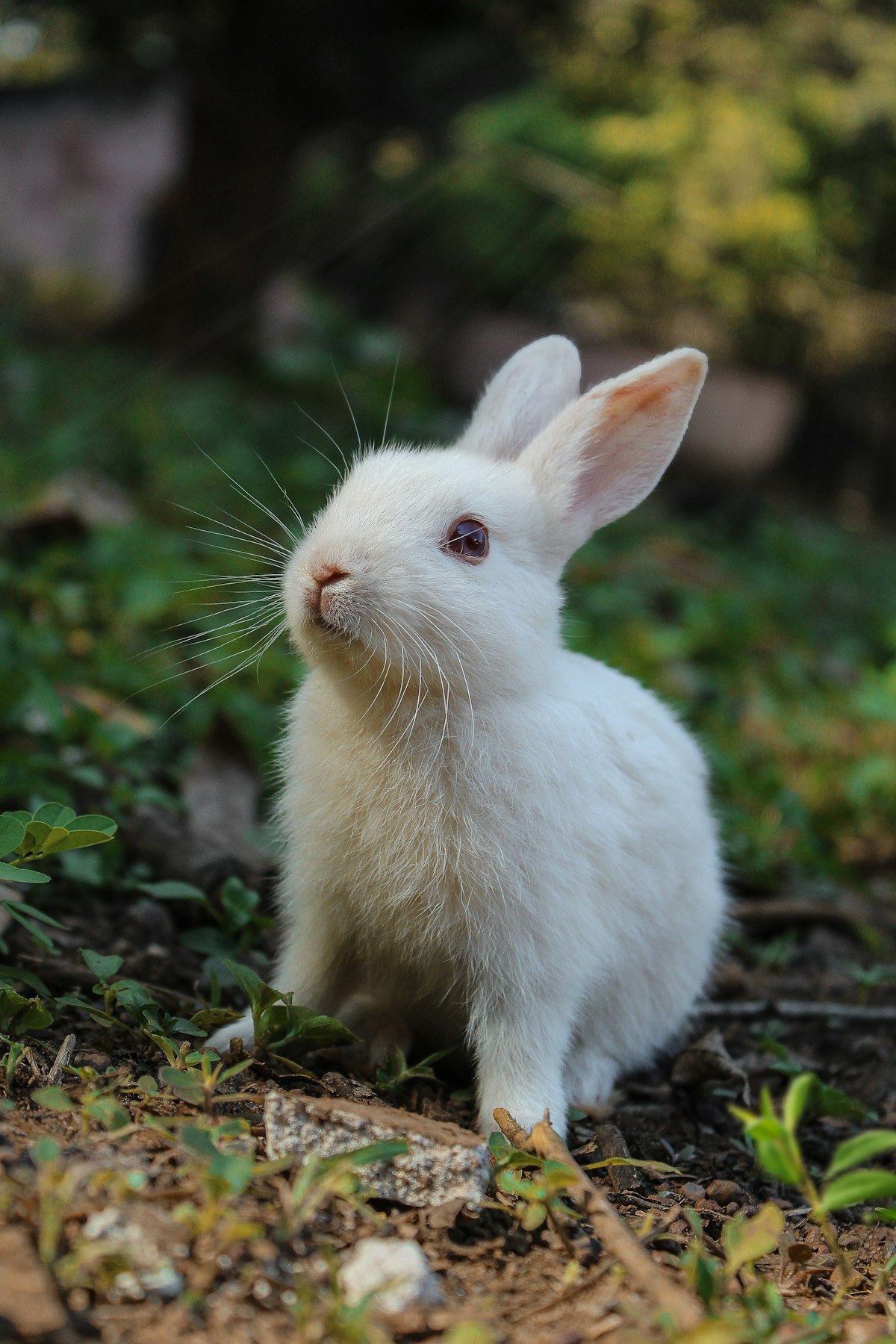
Photo by Andrey Linchenko on Unsplash
"Little Bunny Foo Foo" is deeply weird. Most nursery rhymes deal in familiar moral territory—sharing, kindness, basic safety. This one gives us compulsive violence, surveillance, and a punishment so vague it borders on existential horror.
The song's simplicity is deceptive. Dig into any persistent piece of children's culture and you'll find ideological machinery humming beneath the surface. "Little Bunny Foo Foo" is particularly rich because it brazenly makes these dynamics visible rather than hidden.
What follows are four ways to read the same 30 seconds of children's entertainment. What's striking is no matter which lens you apply, Foo Foo gets destroyed. The "Good" Fairy wins every time. And what she wins is the right to transform someone into something literally unspeakable.
But first, we present the text for reference:
The Text (sung to the melody of 'Alouette')
Little Bunny Foo Foo,
Hopping through the forest,
Scooping up the field mice,
And bopping them on the head.
(Spoken)
Down came the Good Fairy, and she said:
"Little Bunny Foo Foo,
I don't want to see you
Scooping up the field mice,
And bopping them on the head.
I'll give you three chances,
And if you don't behave,
I'll turn you into a goon!"
[The verse repeats with "two more chances," then "one more chance," then:]
"I gave you three chances,
And you didn't behave,
And now I'm gonna turn you into a goon." *POOF!*
Version 0: The Conventional Reading
This is the interpretation most people assume: a straightforward moral fable about misbehavior and consequences.
Little Bunny Foo Foo is a naughty child who hurts smaller creatures. The Good Fairy is a benevolent authority figure teaching him proper behavior through graduated discipline: first warning, second warning, final warning, then punishment. Foo Foo's continued misbehavior despite clear warnings demonstrates willful defiance, making his transformation into a "goon" feel deserved.
The moral is simple: listen to authority, stop hurting others, or face consequences. Children learn that the world has rules, that breaking rules leads to punishment, but that authority figures will give multiple chances for self-correction. It's behaviorism wrapped in fairy tale language—clear expectations, predictable outcomes, justice served.
This reading appeals because it offers moral clarity and reinforces comfortable assumptions about childhood development. Bad behavior stems from choice rather than circumstance. Authority figures act in good faith. Punishment serves justice rather than power.
But even this simple interpretation has obvious cracks. Why doesn't the fairy actually stop the violence instead of just threatening consequences? It sure seems weird not to intervene on behalf of the field mice if they are actually in peril. Also, it bears repeating: what the hell is a goon?! Most audiences don't probe these inconsistencies—they accept the surface lesson about obedience and consequences. But we are not most audiences, so we will proceed deeper.
Version 1: The Nihilistic Philosopher
What if Bunny Foo Foo isn't just misbehaving but conducting a philosophical experiment? What if his repetitive transgression is actually sophisticated inquiry disguised as childish violence?
Consider the evidence for Foo Foo's intentionality. He never attempts concealment—quite the opposite. He performs his transgressions in broad daylight, "hopping through the forest" as if advertising his location. This isn't someone trying to avoid consequences; it's someone flouting the rules, practically staging violations for maximum visibility. Even after the fairy warns him, he never modulates his behavior in the slightest.
The "bopping" itself reveals systematic thinking. Why field mice specifically? They're small, vulnerable, socially irrelevant—perfect test subjects for probing the boundaries of acceptable violence. The action of bopping rather than something more obviously violent is also a stroke of genius. Foo Foo has intuited something profound: that moral systems depend on arbitrary distinctions about what entails suffering, and whose suffering matters. His choice of victims and specific violent mechanism is actually strategic.
Each repetition after a warning becomes philosophical inquiry conducted through action. The fairy says "I don't want to see you scooping up the field mice and bopping them on the head," but what exactly is she prohibiting? The violence itself? The visibility of violence? The disruption of forest hierarchy? Her inability to articulate anything beyond personal preference ("I don't want to see...") exposes the bankruptcy of her moral authority.
Foo Foo's persistence forces a crucial question: if an act becomes wrong only when witnessed by authority, was it ever truly wrong? His continued bopping after each warning is epistemological investigation. He's testing whether moral rules have objective reality or merely represent power asserting itself through surveillance.
The fairy cannot engage with Foo Foo's challenge on intellectual grounds. She has no argument, only authority. She can only resort to threats—the classic last refuge of illegitimate power. Foo Foo has painted her into a logical corner.
This transforms the tale's climax entirely. Foo Foo's conversion to goon isn't the inevitable result of moral transgression. Rather, it's the system's only possible response to genuine philosophical inquiry. The fairy cannot refute his critique, so she eliminates his capacity for critique altogether. The goon transformation represents the murder of philosophical consciousness.
The deliberate vagueness of goon becomes significant here. What exactly has Foo Foo become? The text refuses to say because the concept is literally unthinkable—it's what's left when critical thinking has been surgically removed from a subject. The fairy has created something worse than a criminal: a former philosopher who can no longer remember what philosophy was.
Version 2: The Recruitment Operation
What if the fairy isn't trying to stop Bunny Foo Foo, but actually systematically training him? What if those "warnings" are assessments, and the final transformation isn't punishment but graduation into something far more sinister?
This reading reframes the fairy's behavior as fundamentally deceptive. She presents herself as moral authority while actually functioning as a talent scout for transgression. Her multiple warnings make no sense as deterrence (why give a genuine offender multiple chances? Surely the field mice are not pleased by this tactic…) but make perfect sense as psychological evaluation.
Each "warning" is actually an escalation test. Can Foo Foo maintain antisocial behavior while being observed? Can he persist in harmful acts despite social disapproval? These are precisely the psychological qualifications required for state violence: the ability to enact harm while maintaining plausible moral reluctance.
The fairy's recruitment protocol becomes clear through what she teaches. First, that authority figures will telegraph their concerns in advance, giving operatives time to prepare cover stories. Second, that moral objections are performative rather than genuine—she keeps "warning" but never actually intervenes to protect the mice. Third, that persistence in transgression will be rewarded with advancement rather than punishment (perhaps Foo Foo even wants to become a goon!).
The "bopping" itself becomes a training exercise in selective violence. Foo Foo must demonstrate he can target the vulnerable (field mice) while respecting hierarchical authority (the fairy herself). He's learning the fundamental skill of authoritarian enforcement: recognizing who you're allowed to hurt and who you must never touch.
Each cycle proves Foo Foo has the psychological profile required for institutionalized violence: compartmentalized empathy (he can hurt mice while respecting fairies), but most importantly, the ability to maintain cognitive dissonance indefinitely.
The goon transformation now reads as recruitment rather than punishment. The fairy has identified someone capable of sustained transgression under scrutiny and is inducting him into her enforcement apparatus. The deliberate ambiguity of goon makes perfect sense—it's an intentionally vague job description.
The real horror isn't that Foo Foo became a goon—it's that he was always meant to become one.
Version 3: The Communication Breakdown
What if Bunny Foo Foo never hears the fairy's warnings? What if the entire moral framework collapses because it assumes universal access to communication that simply doesn't exist?
Consider the textual evidence for this reading. The fairy speaks, but there's no indication Foo Foo responds, acknowledges, or even registers her presence. His behavior continues unchanged not because he's defiant, philosophical, or trying to be recruited, but because he's literally unaware that communication has occurred.
This transforms every previous reading into potentially ableist projection. We've assumed Foo Foo's continued bopping represents conscious choice—rebellion, philosophy, compliance with recruitment—when it might simply represent the absence of information. He's not choosing to violate the fairy's prohibition; he doesn't even know the prohibition exists. Maybe he even likes bopping the field mice specifically because he enjoys when a fairy comes down each time and makes interesting sounds at him.
The fairy's mechanical repetition of identical language becomes particularly telling from this angle. She says exactly the same words each time, with only the countdown of chances varying. This is treating communication as information delivery rather than a two-sided interaction.
The repetitive structure functions as accessibility failure compounded. Each iteration represents another missed opportunity for the fairy to recognize the communication breakdown and adapt her approach. Instead of trying visual cues, physical intervention, or alternative communication methods, she simply decreases the numerical parameter. This mirrors real-world ableism: when standard communication fails, increase the pressure rather than change the method.
Foo Foo's deafness, neurodivergence, or language barrier makes him a perfect scapegoat. His continued behavior provides evidence of his "badness" while his inability to defend himself makes him an ideal target for punishment. The fairy gets to feel morally justified while avoiding the hard work of accessible communication.
The "goon" transformation becomes an act of violent ableism—punishing someone for failing to comply with demands they couldn't receive. The fairy has created a crime (ignoring warnings) that requires a capacity (hearing/processing language) that Foo Foo may not possess. He isn't even punished for bopping the mice, but rather for not following instructions that he never received.
Version 4: The Trauma Repetition
What if Bunny Foo Foo's compulsive bopping isn't random aggression but the desperate reenactment of his own unprocessed trauma? What if we're witnessing not moral transgression but a child's attempt to externalize unbearable internal pain?
Consider the behavior itself: "scooping up the field mice and bopping them on the head." This isn't functional violence—Foo Foo doesn't kill; doesn't eat; doesn't achieve any practical goal. The bopping is ritualistic, repetitive, practically ceremonial. It mirrors the way trauma survivors often compulsively reenact their victimization, trying to master through repetition what they couldn't control during the original experience.
The field mice become stand-ins for Foo Foo's younger, more vulnerable self. Small, defenseless, easily scooped up, they represent the powerlessness he once felt. By assuming the role of aggressor, he attempts to flip the script of his own victimization.
The repetitive structure takes on new meaning as trauma loop rather than moral failing. Foo Foo is trapped in a repetition compulsion—the unconscious drive to recreate traumatic experiences. He can't stop bopping because the behavior serves a psychological function: it's his only language for communicating pain he has no other way to express.
The fairy's response reveals a fundamental misunderstanding of what she's witnessing. She sees behavioral management when she should see mental health crisis. She's treating symptom as cause, addressing only surface behavior while ignoring the underlying wound driving it.
This transforms the fairy from moral authority into failed therapeutic intervention. She has the power to help but lacks the wisdom to recognize what help is needed. She never bothers to ask herself "Why is this child hurting others?"; instead, she only thinks "How do I make this child stop?" The first question leads to healing; the second leads to suppression.
Her countdown of chances becomes particularly cruel from this perspective. She's giving a traumatized child opportunities to suppress trauma responses through willpower alone—like telling someone with a broken leg to walk it off. She probably thinks she's being generous by giving him multiple chances, but in reality, they're evidence of her complete misunderstanding of what's actually happening.
The goon transformation represents the ultimate failure of punitive approaches to trauma. Instead of addressing the underlying pain, the fairy simply eliminates Foo Foo's capacity to express it. The goon isn't healed; he's silenced. In fact, for all we know, the future repetition compulsions that this goon will seek out in order to express his pain may be far more serious than mere mouse bopping.
Conclusion
Whether he's a philosophical rebel, recruited enforcer, communication-impaired victim, or trauma survivor, Bunny Foo Foo always ends up erased. The "Good" Fairy wins every scenario, and what she wins is the right to transform someone into an undefined goon—to render them literally unspeakable.
This consistency across interpretations might be the song's most revealing feature. It shows how authority always finds a method to neutralize whatever challenges it, whether that's curiosity, difference, pain, resistance, or simple misunderstanding. The system doesn't solve problems. It merely eliminates the people who embody them.