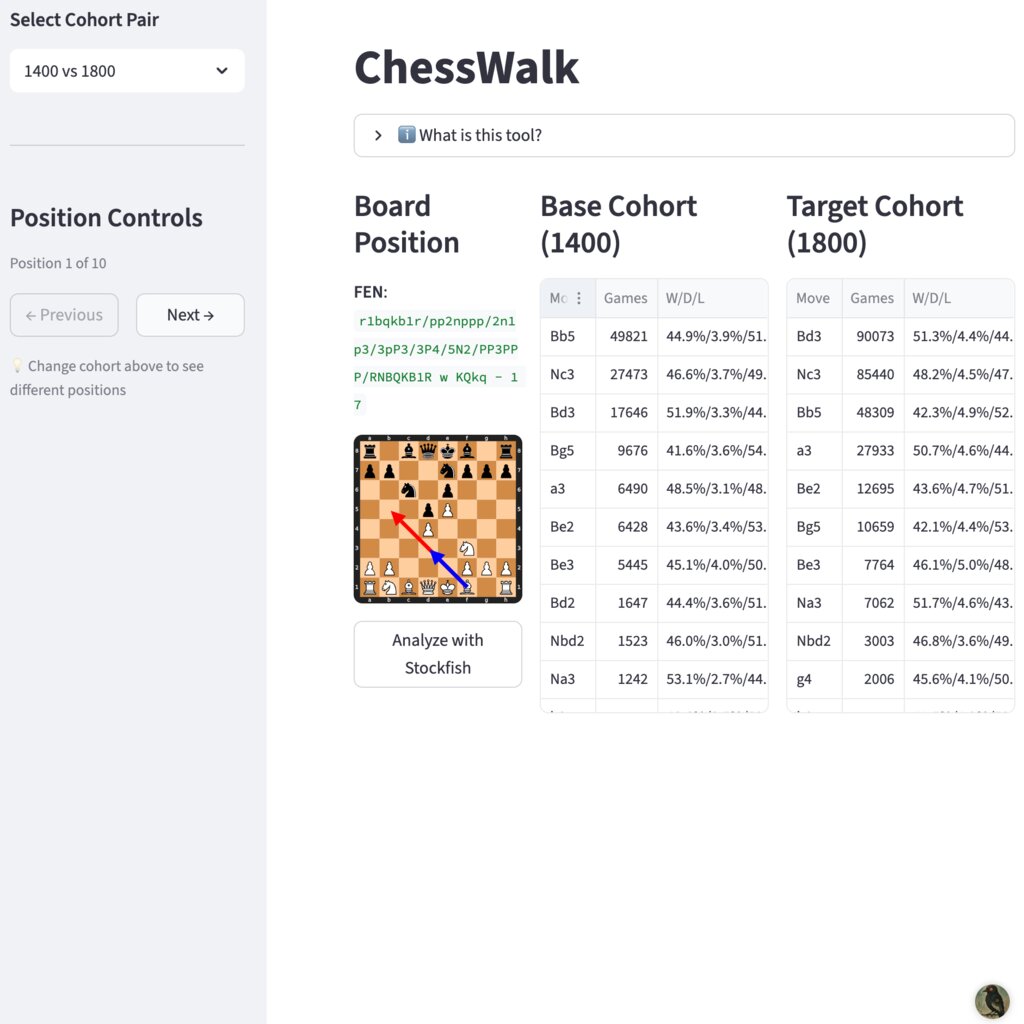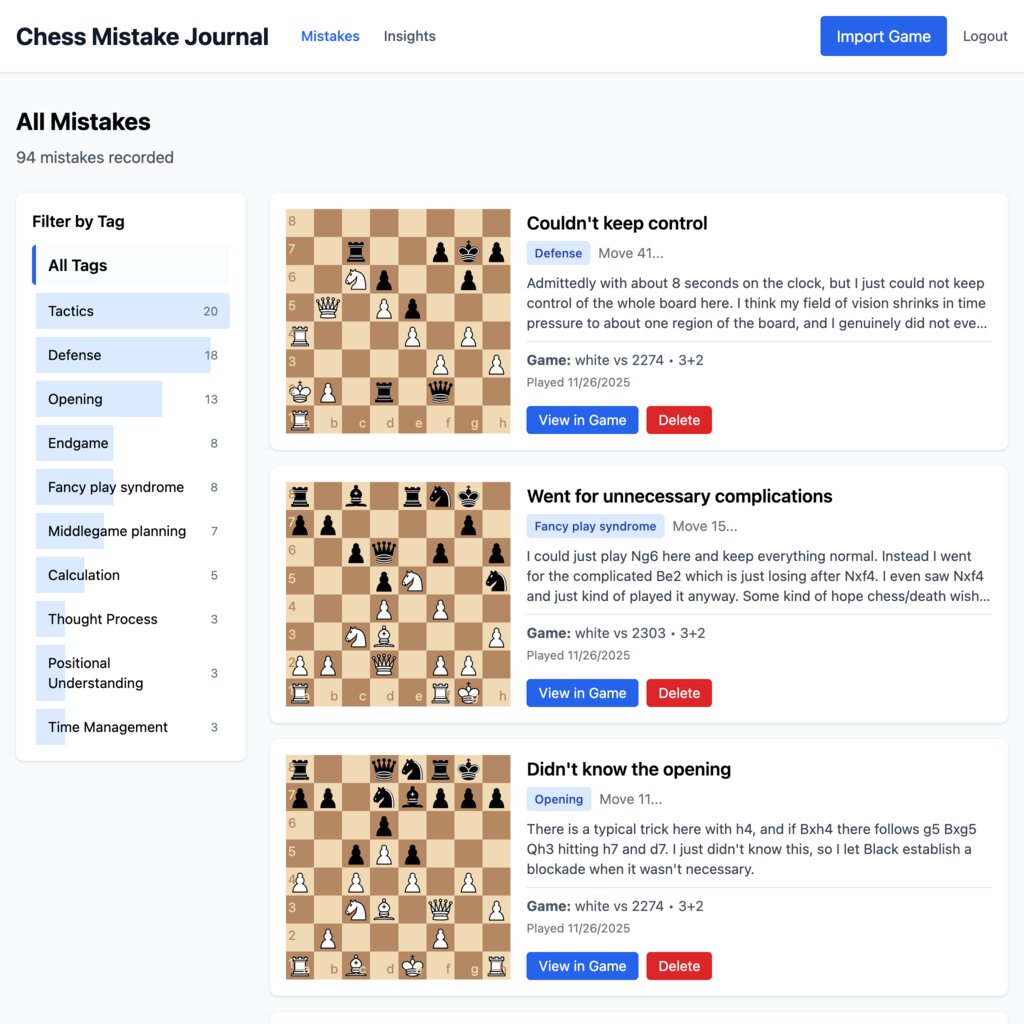
Chess improvement isn't just about finding where you went wrong in your games. It's about understanding why you make the mistakes you do: finding common blind spots, root causes, etc. The Chess Mistakes Journal helps you not only track the moments when things go wrong but also annotate them with your own observations in order to discover patterns in your thinking.
The tool is simple: after a game, you mark the mistakes that mattered, tag them with categories like "opening," "defense," or "time pressure," and write whatever comes to mind about your thought process. Were you uncomfortable? Did you rush? Did you mis-visualize, or not even notice an opponent's threat at all? What were you thinking about?
Over time, you build a searchable catalogue of your mistakes. Then, the journal uses an LLM to read through your unstructured notes and surface recurring themes—kind of like NotebookLM for your chess thinking. The patterns that emerge are hopefully not just about the chess positions, but about also about you: your habits, your blind spots, your mental game.
The goal is to complement traditional analysis tools by capturing the psychological and emotional context that those tools miss. Because sometimes the most important mistake isn't the move you played, but the state of mind that led you there.
While built for chess, the concept could extend to other games like Go or even other forms of reflective practice where understanding recurring patterns in your thinking matters as much as the technical details.
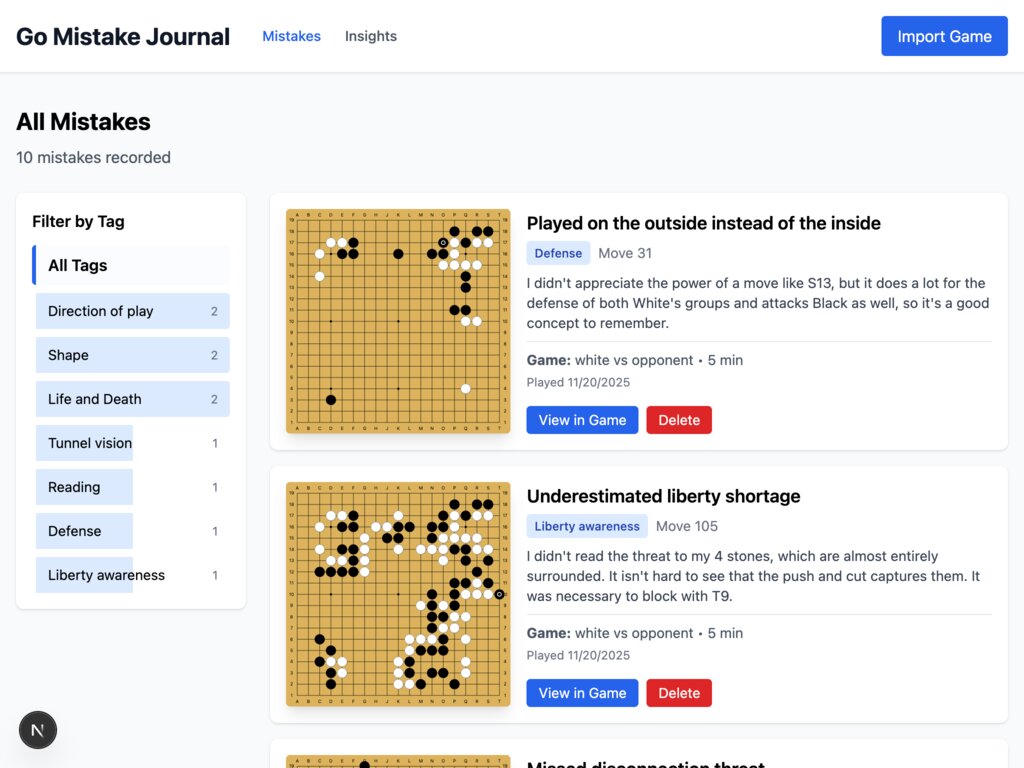
The current version is only scoped for a single user, but if the project grows to support multiple users in the future, I will share a demo link here so that you can try it yourself.